Description
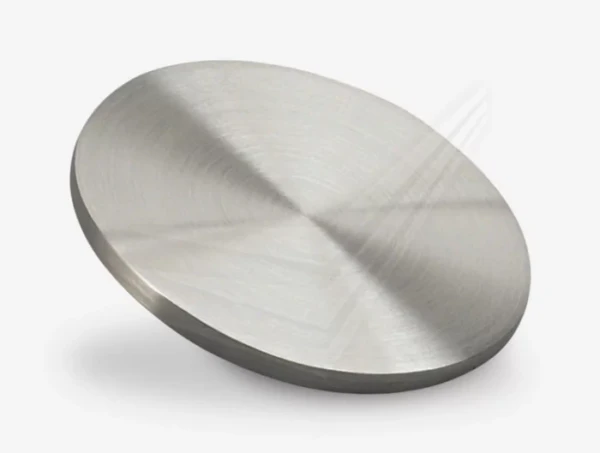
Platinum is one of the nine noble metals in the periodic table. It has a melting point of 1,772°C, a density of 21.4 g/cm³ and a vapour pressure of 10-4 Torr at 1,747°C. It is a bright, silvery white metal that bears a striking resemblance to palladium. It is dense, malleable, ductile and corrosion resistant in air. Its main commercial use is as a catalyst in vehicles. Platinum is evaporated under vacuum to make semiconductors, fuel cells and batteries.
It is also used as a layer for optical coatings. Platinum is commonly found in jewellery and laboratory equipment.
| Material type |
Platinum |
| Symbol |
Pt |
| Atomic weight |
195,084 |
| Atomic number |
78 |
| Colour/appearance |
Metallic, grey |
| Thermal conductivity |
72 Watt/m.K |
| Melting point |
1.772 °C |
| Coefficient of thermal expansion |
8.8 x 10⁻⁶/K |
| Theoretical density |
21.45 g/cm³ |
| Z-ratio |
0,245 |
| Sputter |
DC voltage |
| Max. power density |
100 watts/square inch* |
| Bonding type |
Indium, elastomer |
| Remarks |
Alloyed with metals.
Layers soft, poor adhesion.
Temperatures required to achieve deposition
may not be practical for thermal evaporation. |
*This is a recommendation based on our experience with these materials in our sputter guns. Rates are based on unbonded targets and are material specific. Bonded targets should be operated at lower power to avoid bonding failure. Bonded targets should be operated at 20 watts/square inch or less depending on the material.